

The optimal method depends on your container type, product sensitivity, and regulatory requirements. Headspace analysis is often preferred for its sensitivity, versatility, and non-destructive nature.
What is CCIT? Container Closure Integrity Testing Explained
Container Closure Integrity Testing (CCIT) is the process of evaluating whether pharmaceutical packaging systems adequately protect their contents from microbial contamination and reactive gases such as oxygen and moisture.
Good container closure integrity ensures that pharmaceutical products remain stable, sterile, and safe throughout storage, transport and administration.
Explore LIGHTHOUSE’s full range of CCIT solutions to see how deterministic testing supports compliance across the product life cycle

Why Container Closure Integrity is Critical in Pharma
A compromised pharmaceutical container can result in leakage, microbial ingress, or exposure to harmful gases and moisture—leading to degraded efficacy and serious risks to patient health. Regulatory authorities therefore require robust container closure integrity testing strategies to demonstrate that packaging systems consistently protect drug products throughout their shelf life.
Container closure failure not only jeopardizes patient safety but also exposes manufacturers to regulatory risk, potential product recalls, and brand damage. Implementing reliable CCIT strategies mitigates these risks and supports compliance with current global standards.
Probabilistic vs Deterministic CCIT Methods

Pharmaceutical companies can employ a range of techniques to evaluate closure integrity. The choice of method depends on product characteristics, container type, and regulatory objectives.
Probabilistic Methods (e.g. blue dye test)
Traditional probabilistic methods—such as the microbial ingress and blue dye tests—are qualitative tests based on a sequence of events subject to random outcomes. These methods are therefore inherently variable, often destructive, and difficult to validate. While historically used, they are now considered less reliable due to sensitivity limitations and operator dependency.

Deterministic Methods for CCIT
Because of the obvious issues with probabilistic methods there has been a regulatory shift recommending pharmaceutical companies to move to deterministic test methods. Techniques such as vacuum decay, helium leak detection, and non-destructive headspace gas analysis are not subject to environmental factors or human variability. They offer quantitative results and higher sensitivity, aligning with current regulatory preferences.
At LIGHTHOUSE, we specialize in non-destructive CCIT using headspace gas ingress analysis. Headspace analysis delivers sensitive, high-throughput results to ensure package integrity throughout the product life-cycle.
Deterministic CCIT Methods Compared: Headspace, HVLD, Vacuum Decay & Helium Leak
While all deterministic technologies share the regulatory advantage of being quantitative, predictable, and repeatable (in alignment with USP <1207>), they rely on fundamentally different physical principles. Selecting the right method depends largely on your product type (liquid, lyo, or solid), container material, and required leak sensitivity. Elastomeric closure components are addressed separately under USP <382>, which governs functional suitability testing for stoppers and seals.
- Headspace Gas Ingress Analysis: This non-destructive method uses laser-based spectroscopy to monitor changes in gas composition (such as oxygen or a tracer gas like carbon dioxide) within the container. It is exceptionally versatile and uniquely capable of identifying transient leaks—such as those occurring temporarily during deep cold or cryogenic storage—or process-induced leaks, making it specifically suitable for lyophilized products.
- High Voltage Leak Detection (HVLD): This technique passes a high-voltage electrical current across the exterior of a non-conductive container (like glass or plastic). If a leak path exists, the electrical resistance drops as the current finds the conductive liquid inside. While highly automated and sensitive, its use is strictly limited to liquid-filled products with sufficient electrical conductivity.
- Vacuum Decay: In this non-destructive method, the sample is placed in a tightly sealed chamber where a vacuum is pulled. If the container leaks, gas or liquid escapes into the dead space, causing a measurable rise in pressure. Vacuum decay is fast, cost-effective, and highly reliable for a broad range of liquid and lyophilized product types, though it can struggle with leaks blocked by highly viscous liquids or solids.
- Helium Leak Detection: As a precise tracer gas method, helium leak testing requires flooding the container with helium and drawing a vacuum around it to detect escaping atoms using a mass spectrometer. While capable of high sensitivity, this method is a destructive test with very limited throughput, restricted to analyzing only few samples at a time. Consequently, its application is limited strictly to defining the Maximum Allowable Leakage Limit (MALL) during early packaging development, as it cannot be utilized further down the product life-cycle for routine testing.
Each of these advanced methods offers unique operational boundaries, capital costs, and throughput speeds.
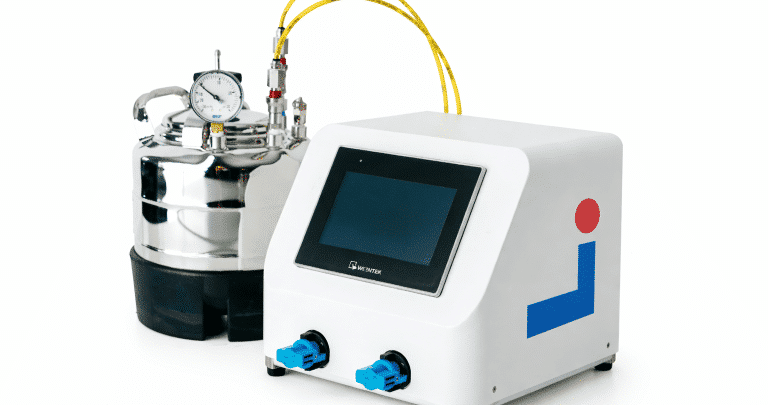
Headspace Analysis with LIGHTHOUSE Technology
Today, laser-based headspace analysis is the most versatile non-destructive CCIT technology available. As a true platform method, the same analytical technology can be applied throughout the product lifecycle—from packaging selection and process development to validation, stability studies, and commercial manufacturing.
This continuity enables manufacturers to generate comparable data across development stages while building a comprehensive understanding of container closure performance.
LIGHTHOUSE technology detects minute changes in headspace gas composition that indicate gas exchange through container defects, whether products are stored under ambient or cryogenic conditions.
Unlike other deterministic CCIT methods, headspace analysis can detect temporary leaks that occur as a result of manufacturing processes or temperature-related stresses. It can also be used to demonstrate vacuum retention throughout the product shelf life.

Applications of CCIT: Parenteral Liquid, Lyophilized & Cold-Chain Products
For what type of pharmaceutical products can container closure integrity testing with non-destructive headspace analysis be used?
Lyophilized Products
Lyophilized (freeze-dried) drugs are particularly vulnerable to container closure integrity failures due to their complex manufacturing process and sensitivity to moisture and pressure changes. Temporary leaks caused by stopper movement can occur during manufacturing posing risks to product stability and sterility. A robust CCIT strategy is therefore essential. Non-destructive headspace analysis is uniquely suited to detect these transient leak events while also demonstrating vacuum retention throughout shelf life.
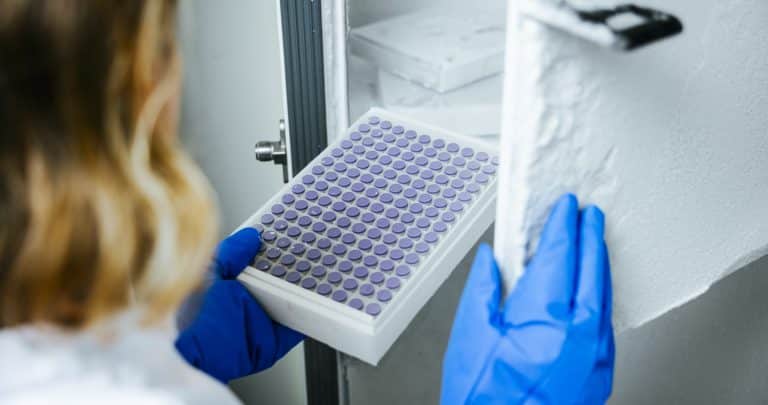
CCIT for Cold Chain & Cryogenic Storage
Cel and gene therapies and other temperature-sensitive drugs stored at frozen or cryogenic conditions are at a higher risk of closure integrity loss due to material design limitations. Headspace analysis can detect the temporary leaks that occur under these extreme conditions.
Read more about cold chain CCIT for deep cold storage and cryogenic packaging applications.
Fill-Finish & Parenteral Packaging
Parenteral drugs require sterile packaging. CCIT supports the validation of fill-finish operations, ensuring the final product meets regulatory requirements before release.

Benefits of Non-Destructive CCIT Using Headspace Analysis
- Rapid and Non-Destructive: Analysis is completed in seconds, enabling high-throughput testing without damaging the product.
- Regulatory Compliance: Aligns with current regulatory preferences.
- Detection of Temporary Leaks: Detect transient closure failures in ultra-cold or lyophilized products.
- Highly Sensitive: Delivers helium leak test–level sensitivity while enabling analysis of significantly larger sample populations across a wide range of container formats.
- Data-Driven Insights: Science-based process improvement and risk mitigation.
- Cost-Efficient: An analytical understanding of your process and packaging reduces the risk of product recalls.

CCIT Services: Method Development to Routine Batch Testing
From our GMP certified laboratory we offer a complete suite of CCI testing services tailored to your specific needs and requirements. We can perform these studies in-house or on-site at your facility.
Method Development & Validation
Our team works closely with you to develop and validate CCIT methods optimized for your product and container closure system.
Routine Batch Testing
Leverage our expertise and advanced instruments for ongoing batch release testing, stability studies, and quality control.
CCI testing services in accordance with regulatory expectations
We support your compliance efforts with guidance aligned to the latest regulatory expectations for deterministic CCIT. Our method development and validation services are all in accordance with USP <1207> and in compliance with EU GMP Annex 1.
Let us help you ensure container closure integrity from development through patient administration.
Frequently Asked Questions About CCIT
CCIT is the process of evaluating whether a pharmaceutical packaging system adequately protects its contents from microbial contamination and reactive gases such as oxygen and moisture, so that products remain stable, sterile, and safe throughout storage, transport, and administration.
Traditional probabilistic methods include the blue dye ingress test and microbial ingress testing. Both are qualitative, subject to random outcomes, and are now considered less reliable due to sensitivity limitations and operator dependency.
Deterministic technologies include non-destructive headspace gas analysis, High Voltage Leak Detection (HVLD), vacuum decay, and helium leak detection. All are quantitative, predictable, and repeatable, aligning with USP <1207>, though each relies on different physical principles and has different operational boundaries.
LIGHTHOUSE provides full method development and validation services in accordance with USP <1207> and current regulatory expectations, from initial feasibility assessment through to formal validation.
During the development of the method, positive controls that mimic a gross leak are included in the study.