LIGHTHOUSE headspace analysis offers a true platform technology where the same core technology can be used from early development through commercial manufacturing. It is deterministic, aligns with USP <382>, USP <1207>, and EU GMP Annex 1, uniquely capable of detecting temporary leaks, and proven across vials, syringes, cartridges, and autoinjectors.
Container Closure Integrity Testing (CCIT)
LIGHTHOUSE provides rapid, non-destructive Container Closure Integrity Testing (CCIT) for parenteral pharmaceuticals. We offer CCIT equipment, GMP laboratory services, method development, validation, and 100% inspection solutions to meet global regulatory requirements.

Why choose LIGHTHOUSE for CCIT?
- One CCIT technology from R&D to production
- CCIT that aligns with USP <382>, <1207>, and EU GMP Annex 1
- Uniquely capable of detecting temporary leaks
- GMP support for batch release and stability testing
- Detection of all leak sizes on large sample sets
- Proven for vials, syringes, cartridges, and autoinjectors
What is Container Closure Integrity Testing (CCIT)?
Container Closure Integrity Testing (CCIT) verifies that a pharmaceutical packaging system maintains a sterile barrier against microbial ingress, moisture, oxygen, and product loss throughout its shelf life.
Container closure integrity (CCI) is a critical quality attribute for sterile products, including biologics, vaccines, injectables, and advanced therapies. Even microscopic leaks can compromise product quality, stability, and patient safety.
To meet modern regulatory expectations, such as USP <1207> and EU GMP Annex 1, manufacturers increasingly adopt deterministic CCIT methods that provide quantitative, repeatable, and scientifically defensible measurements of package integrity throughout the product lifecycle.
Learn more about container closure integrity testing on our “What is CCIT?” page.
TOPICS ON THIS PAGE
- Why use headspace gas ingress as a deterministic CCIT method
- How to replace the blue dye test?
- How does headspace gas ingress analysis compare to other deterministic CCIT methods?
- For which products is there no better alternative than headspace gas ingress analysis?
- How to develop a robust CCIT method based on headspace gas ingress analysis
- The regulatory landscape around deterministic CCIT

Why Deterministic CCIT with Headspace Gas Ingress
Regulatory guidance increasingly favors deterministic CCIT methods because they provide objective, quantitative, and repeatable measurements with greater sensitivity and reproducibility than probabilistic techniques. USP <1207> explicitly identifies deterministic methods as the preferred approach for package integrity testing whenever feasible.
One deterministic method highlighted in USP <1207> is laser-based headspace gas analysis. Pioneered by LIGHTHOUSE more than 25 years ago, this non-destructive technology measures changes in oxygen, carbon dioxide, moisture, and pressure within sealed containers.

Laser-based headspace analysis is a true platform technology.
While many deterministic methods are limited to either laboratory testing or production inspection, the same core LIGHTHOUSE technology can be applied from package development and method validation through stability studies and commercial manufacturing. This simplifies validation activities, and enables organizations to build a holistic container closure integrity testing strategy.

Replacing Blue Dye: From Probabilistic to Deterministic CCIT
Blue dye ingress testing has long been used to assess package integrity in the pharmaceutical industry. However, its limitations are becoming increasingly difficult to justify under modern regulatory expectations.
Blue dye testing is destructive, operator-dependent, and limited in sensitivity. It often fails to detect tortuous or microscopic leak pathways because liquid surface tension can prevent dye from entering the defect. In addition to its probabilistic nature, blue dye testing is difficult to validate.
By replacing liquid dye with a tracer gas in combination with laser-based headspace analysis instead of visual inspection, manufacturers can achieve greater sensitivity, reproducibility with a validated method, in stronger alignment with USP <1207> and compliant to EU GMP Annex 1.
Learn how deterministic CCIT can replace blue dye ingress testing.
Replacing Blue Dye Ingress with Headspace Gas Ingress
Replacing Blue Dye Ingress with Headspace Gas Ingress

Comparing CCIT Methods: Headspace, HVLD, Vacuum Decay & Helium Leak
Selecting the appropriate technology requires understanding the strengths and limitations of each approach.
High Voltage Leak Detection (HVLD) is widely used for conductive liquid products and high-speed production environments but is limited to specific product types.
Vacuum Decay remains a valuable deterministic method for many package configurations, particularly in laboratory environments and offline sampling programs. Although vacuum decay is widely used for CCIT, test results can be influenced by package variability, environmental fluctuations, and operator-dependent factors. This can limit sensitivity, increase false positives, and make it difficult to achieve consistent performance across products and testing environments.
Helium Leak Detection offers exceptional sensitivity and is often used for package development studies and MALL investigations, although its complexity and throughput limitations can restrict broader implementation.
Headspace gas analysis provides a true platform solution for pharmaceutical manufacturers seeking a deterministic, non-destructive method capable of supporting development, stability testing, and production inspection. With a sensitivity that is similar to helium leak detection, it is well suited for all parenteral products and has clear benefits specifically for lyophilized products, gas-sensitive formulations, cold-chain applications, and combination products.

CCIT for Lyophilized, Cold-Chain & Autoinjector Products
Certain pharmaceutical products present unique package integrity challenges that require specialized testing strategies.
Lyophilized Products
Freeze-dried formulations are often sealed under reduced pressure and inert gas conditions. Maintaining these internal conditions is critical to long-term stability and product performance. Headspace analysis enables non-destructive monitoring of vacuum retention, moisture ingress, and gas composition throughout the product lifecycle.
In addition, lyophilized products can be prone to temporary defects due to stopper pop-up prior to final crimping of the container. These types of defects can only be detected with headspace gas ingress analysis.
Qualification of Raised Stopper Limits
Qualification of Raised Stopper Limits
Cold-Chain and Cryogenic Products
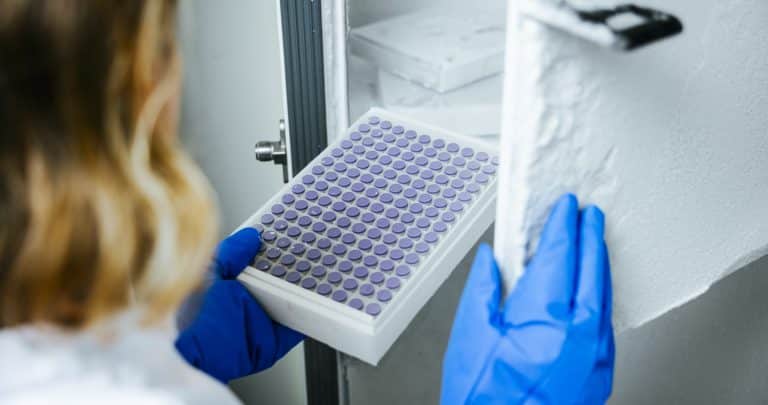
Advanced biologics, mRNA vaccines, cell therapies, and gene therapies frequently experience storage temperatures far below conventional pharmaceutical conditions.
At these temperatures, elastomeric closures lose their elasticity, contract and sealing effectiveness decreases, creating transient leaks that may not be present once the product returns to room temperature. Headspace gas ingress analysis is the only deterministic method that can non-destructively identify these failures on large sample sets.
Autoinjector Products
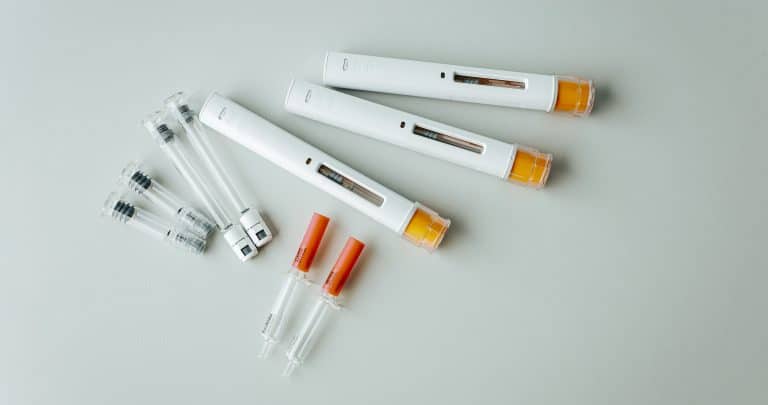
Combination products introduce additional packaging complexity through integrated delivery mechanisms and protective housings. Traditional inspection methods can be difficult to implement without disassembling the device. Headspace gas ingress analysis provides flexible solutions capable of evaluating fully assembled systems while preserving product integrity.

CCIT Method Development & Validation
Successful implementation of a deterministic CCIT program requires more than selecting the right technology. Manufacturers must also establish validated, scientifically defensible methods that demonstrate fitness for purpose.
LIGHTHOUSE’s structured approach to method development and validations allows organizations to establish clear limits of detection, demonstrate repeatability and reproducibility, and generate documentation that supports regulatory submissions and inspections.
Additionally, because headspace analysis functions as a true lifecycle platform, methods developed during early stage research can be easily transferred and scaled into validated production-line testing.
LIGHTHOUSE provides a comprehensive, end-to-end service suite in our GMP-certified laboratory to support your CCIT strategy efficiently:
- Method Feasibility & Scope: Evaluating your product and packaging, and matching our tracer gas ingress method to your specific integrity goals.
- Method Optimization: Adjusting conditioning environments to establish robust analytical baselines.
- Validation & Positive Control Strategy: Deploying robust positive control methodologies to confirm the definitive Limit of Detection (LOD).
Review our structured approach on our CCIT Method Validation & Development page.

CCIT Regulatory Compliance: USP <382>, USP <1207> & EU GMP Annex 1
Regulatory expectations for package integrity have evolved significantly over the past decade. Manufacturers are increasingly expected to demonstrate package integrity using scientifically sound methodologies and have a full understanding of what parts of the process may introduce risks to CCI.
- USP <382>: Focuses on the functional integrity of elastomeric components and their sealing capacity in an assembled container, fitness-for-use, and integrity testing for single- and multidose products.
- USP <1207>: Classifies technologies and mentions an explicit preference for deterministic over probabilistic methods, and references the establishment of a Maximum Allowable Leakage Limit (MALL).
- EU GMP Annex 1: Enforces a holistic approach to container closure integrity, with a strong focus on having a science-based understanding of your package and process to mitigate any risks to CCI.
Organizations that implement a lifecycle-oriented deterministic CCIT strategy are often better positioned to demonstrate compliance and support regulatory inspections.
To discover how a true platform technology such as headspace gas ingress analysis guarantees seamless compliance, read our dedicated page on CCIT Regulatory Guidelines , USP <1207>, and USP <382> requirements
Frequently Asked Questions About CCIT
CCIT is the process of evaluating whether a pharmaceutical packaging system adequately protects its contents from microbial contamination and reactive gases such as oxygen and moisture, so that products remain stable, sterile, and safe throughout storage, transport, and administration.
The same core LIGHTHOUSE technology can be applied from package development through stability studies and commercial manufacturing, unlike many deterministic methods that are limited to either laboratory testing or production inspection. This continuity simplifies validation activities and supports a holistic CCIT strategy.
Blue dye ingress testing is destructive, operator-dependent, and limited in sensitivity, often failing to detect tortuous or microscopic leak pathways because liquid surface tension can prevent dye from entering the defect. It is also probabilistic in nature and difficult to validate, whereas replacing it with tracer gas and laser-based headspace analysis achieves greater sensitivity and reproducibility with a validated method.
Freeze-dried formulations are often sealed under reduced pressure and inert gas conditions, and can be prone to temporary defects from stopper pop-up prior to final crimping. Headspace analysis enables non-destructive monitoring of vacuum retention, moisture ingress, and gas composition, and can detect these temporary defects, which other methods cannot identify.
LIGHTHOUSE offers a comprehensive suite of services. From our GMP-certified laboratory we provide method development and validation services, clinical and commercial batch release CCI testing, and stability testing. We also provide on-site services and the option to lease our full range of equipment - from benchtop analyzers through the fully automated 100% inspection platforms.
LIGHTHOUSE's deterministic CCIT approach aligns with USP <382> for elastomeric component functional suitability, USP <1207> for package integrity evaluation, and EU GMP Annex 1 for holistic contamination control.
Knowledge Center
Latest Resources on Container Closure Integrity Testing
-
 Flyers
Compliance Program for EU Annex 1 Container Closure Requirements
-
Case studies
Achieving Container Closure Integrity During Cryogenic Storage Conditions Using an Optimized Vial Stopper Combination
-
Case studies
100% Container Closure Inspection of Freeze Dried Product in Quarantine
-
Case studies
Ensuring Container Closure Integrity (CCI) for Products requiring Deep Cold Storage by correlating Seal Quality to CCI
-
Articles
Method Development for a CCI Test Using Headspace Gas Ingress





Get in touch with Steven
Do you have questions about our services or need expert advice for your project? Our dedicated team is here to help. Contact us today to learn how we can support your specific needs.