

As drug delivery systems become more sophisticated and regulatory standards more stringent, the limitations of blue dye ingress testing are increasingly difficult to justify. Being a probabilistic method, it relies on a sequence of events with random outcomes, making results inherently uncertain and difficult to reproduce consistently.
Replace Blue Dye Test with Deterministic CCIT
The regulatory landscape regarding container closure integrity testing (CCIT) is changing, resulting in a period of significant transformation for the pharmaceutical industry. Traditional CCIT using blue dye has served the industry well, but as drug delivery systems become more sophisticated and regulatory standards more stringent, the limitations of these methods are becoming impossible to ignore.
When a single packaging failure can compromise patient safety and trigger costly recalls, it is time to move beyond methods that leave results to chance. The industry needs a more reliable and sensitive solution.
Enter non-destructive CCI testing using headspace analysis—a modern, analytical alternative that delivers the accuracy and repeatability your quality products require.
New to the topic? Learn the basics of CCIT, or explore our full range of Container Closure Integrity Testing solutions.

Why the Blue Dye Test Is No Longer Enough
Blue dye ingress testing has been the pharmaceutical industry standard for decades, but its fundamental limitations are becoming increasingly problematic in today’s regulatory environment.
Being a so-called probabilistic method, it relies on a series of sequential events with random outcomes, making results inherently uncertain and difficult to reproduce consistently.
Traditional dye ingress testing faces several significant challenges that compromise its reliability and effectiveness:
- Detection Limitations: The method can only detect relatively large defects, making small defects that impact product quality difficult or impossible to identify. Even when leaks exist, they may go undetected if the pathway is small or tortuous, preventing dye from reaching the defect site.
- Technical Factors: Multiple variables influence test outcomes, including fluid dynamics, test conditions, and environmental factors that affect dye penetration. False negatives frequently occur when microdefects do not allow dye entry due to surface tension, trapped air, or insufficient pressure differential.
- Human Variability: Operator interpretation varies significantly between individuals, introducing subjectivity into what should be an objective measurement. This variability compounds the technical limitations and reduces overall test confidence.
Regulatory authorities have recognized these limitations. The FDA, EMA and other global authorities are increasingly recommending the adoption of deterministic test methods that provide quantitative, reproducible results.
There is a growing consensus that probabilistic approaches, such as blue dye testing, no longer meet modern standards.

Blue Dye Test vs Deterministic CCIT: What Changed
The evolution from probabilistic to deterministic testing represents more than a technological upgrade—it’s a fundamental shift in how to approach container closure integrity. Deterministic testing methods offer several critical advantages over their probabilistic predecessors. They provide consistent results allowing validation of methods that can be defended under regulatory scrutiny. In addition, the quantitative nature of the data enables statistical analysis and trend monitoring, supporting continuous improvement initiatives and risk-based quality strategies. This shift reflects the USP <1207> deterministic methods framework.
This transition addresses the pharmaceutical industry’s growing need for science-based data-driven decision making and robust quality systems that can withstand regulatory inspection and ensure consistently high product quality.
How CO₂ Tracer Gas + Headspace Analysis Replaces the Dye Test

CCI testing using carbon dioxide as a tracer gas represents the gold standard in container closure integrity testing. It offers sensitivity and precision that far exceed traditional methods. This method is performed using our FMS-CO₂ Headspace Analyzer.
The method relies on the combination of gas ingress and an analytical measurement. Here’s how it works:
- Baseline Establishment: Samples are non-destructively measured for headspace carbon dioxide levels using advanced laser spectroscopy to establish baseline concentrations.
- Conditioning Phase: Samples are exposed to carbon dioxide gas in a pressure-controlled environment, allowing the tracer gas to enter through any potential leaks in the container system.
- Detection and Analysis: The carbon dioxide concentration inside the container are again measured using laser-based Frequency Modulation Spectroscopy (FMS). Any significant increase in headspace CO₂ levels indicates a loss of container closure integrity—no dye, no destruction, just data.

This CCI testing method offers remarkable sensitivity, capable of detecting even the smallest breaches in package integrity as described in USP <1207.1> section 3.9: Leak Test Detection Limit.
Unlike destructive testing methods, headspace analysis preserves the test samples, enabling further analysis or even batch release. The non-destructive nature of the technology provides additional advantages for pharmaceutical manufacturers.
Large sample sets can be analyzed rapidly, supporting robust statistical sampling strategies. The method also enables detection of temporary defects that may occur during processing, storage or transport.
Case Study: Replacing Blue Dye Testing for Autoinjectors
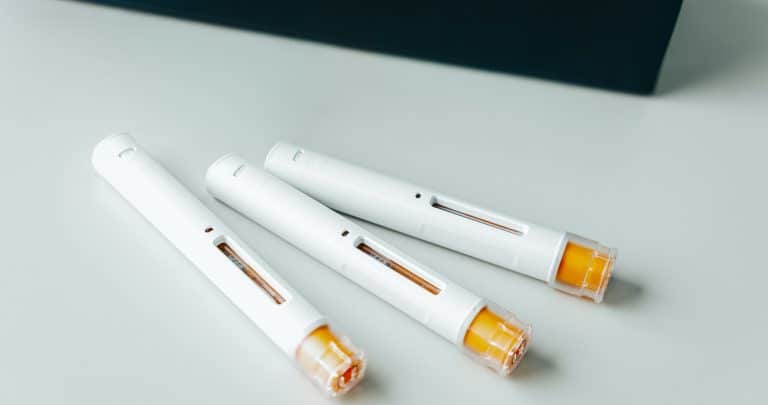
There has been an increased demand from clinicians to increase the ease of use of injectable pharmaceutical products for their patients. This has in turn led to an increase in the popularity of autoinjector product configurations.
Modern autoinjector assemblies however, are challenging configurations to test for CCI. It is typical to disassemble these complex devices to perform dye ingress testing on the primary syringe package, introducing variables that don’t reflect real-world conditions. Not only is this a destructive testing approach, it also fails to evaluate the container closure integrity of the fully assembled system as it will be used by patients.

LIGHTHOUSE was approached by a client that needed a robust CCIT method for an autoinjector product. They faced these common industry challenges that perfectly illustrates the limitations of traditional testing.
The product consisted of an autoinjector housing a 1mL glass prefilled syringe (PFS). The autoinjector’s design was well-suited for laser-based headspace analysis, featuring an optically transparent window that allowed the laser to pass through the PFS’s headspace.
LIGHTHOUSE developed a comprehensive CCI testing strategy using a combination of CO2 as a tracer gas and non-destructive headspace analysis, as described above. The method was designed to evaluate container closure integrity of the fully assembled autoinjector during storage at 5°C, representing actual storage conditions for their product.
The study design included different sample groups, ranging from laser-drilled positive controls with certified micron sized defects, to negative controls containing no defect. This comprehensive approach ensured reliable detection of known defects while avoiding false positive results from intact packages.

The conditioning protocol involved placing samples inside a carbon dioxide filled pressure vessel for 60 minutes at 5°C. This allows the tracer gas to enter the PFS through the created defects, at actual product storage conditions.
The study results fully met the client’s expectations:
- Testing aligned with USP 1207
- Fully assembled autoinjectors were tested without disassembly
- All micron sized laser-drilled defects in empty syringes were reliably detected
- There were no false positive results
The client was able to confidently replace blue dye testing with CO₂ headspace analysis for testing fully assembled autoinjectors. Explore more examples in our autoinjector CCIT case study collection, or see our case study on CCI test method validation for prefilled syringes.

Benefits of Deterministic CCIT vs Dye Ingress
Switching to deterministic CCIT using a combination of a tracer gas and headspace analysis isn’t just a technical upgrade—it’s a strategic advantage that extends far beyond simple replacement of outdated methods.
Why pharmaceutical companies are making the switch

- Non-Destructive Testing: Preserve your samples for further analysis. Tested samples can even be released for commercial use in appropriate circumstances, maximizing product yield.
- Regulatory Alignment: Satisfy evolving expectations from global regulators. The technology aligns with USP guidance documents and international standards.
- High Sensitivity: Detect leak paths too small for dye ingress or even most other deterministic test methods. The method can identify defects that traditional methods might miss, including temporary seal failures.
- Consistent Results: Remove operator subjectivity and variability. Quantitative, reproducible data meets the current desire for deterministic testing methods.
- Life Cycle Coverage: Test during development, production, release, and stability. The method’s versatility accommodates diverse packaging configurations and storage conditions, from room temperature products to cryogenic biologics.
- Speed and Efficiency: Measurements take only seconds, making analysis of large sample sets easy and enabling real-time quality decisions.
- Process Insights: Quantitative headspace data enables trend analysis, process optimization, and predictive quality strategies that help identify emerging issues before they impact product quality.
- Cost-Effective: Because the measurement is non-destructive, product loss due to analytical requirements can be reduced. Furthermore, the analytical insights support process improvements that prevent quality issues rather than simply detecting them after occurrence. This in turn helps minimize, or even prevent, recalls from occurring.
For any parenteral product, rapid, non-destructive headspace analysis gives you the confidence that your container systems are secure throughout their entire lifecycle.
Get the Complete Case Study
Curious how to make the leap from legacy testing to modern CCI assurance? Read the full case study to explore the data, protocols, and results in detail.
Still relying on the blue dye test? Now is the time to replace dye ingress test methods with faster, smarter, and more robust solutions. At LIGHTHOUSE, we help pharmaceutical companies transition from outdated tests to deterministic CCIT that meets today’s needs—and tomorrow’s standards.
Frequently Asked Questions About CCIT
Blue dye testing has detection limitations, since small or tortuous defects may not allow dye to reach the defect site; technical factors such as fluid dynamics and test conditions affect dye penetration and can cause false negatives; and human variability in operator interpretation introduces subjectivity into what should be an objective measurement.
A probabilistic method relies on a series of sequential events with random outcomes, so results are inherently variable and difficult to validate, in contrast to deterministic methods that provide consistent, quantitative, and repeatable data.
The method has three stages: samples are non-destructively measured for baseline headspace CO2 levels; samples are then conditioned by exposure to carbon dioxide gas within a pressure-controlled environment, allowing tracer gas to enter through any potential leaks; and headspace CO2 is measured again using laser-based headspace analysis, where a significant increase indicates a loss of container closure integrity.
No. Headspace analysis is non-destructive, which preserves samples for further analysis and, in appropriate circumstances, allows tested samples to be released for commercial use.
Yes. In a case study involving an autoinjector housing a 1 mL glass prefilled syringe, an optically transparent window allowed the laser to pass through the syringe headspace, enabling CCI testing of the fully assembled device rather than requiring disassembly, which is typically necessary for dye ingress testing.
Benefits include non-destructive testing that preserves samples, alignment with USP guidance and international regulatory standards, high sensitivity capable of detecting leak paths too small for dye ingress, consistent and reproducible results free of operator subjectivity, coverage across the full product life cycle, rapid measurement times, and data that support process insights and cost efficiency through reduced product loss and recalls.
Yes. The FDA, EMA, and other global authorities increasingly recommend deterministic test methods that provide quantitative, reproducible results, reflecting a growing consensus that probabilistic approaches such as blue dye testing no longer meet modern standards.