

 Case studies
Knowledge Center
CCI Test Method Development for Autoinjectors with an Optically Transparent Window
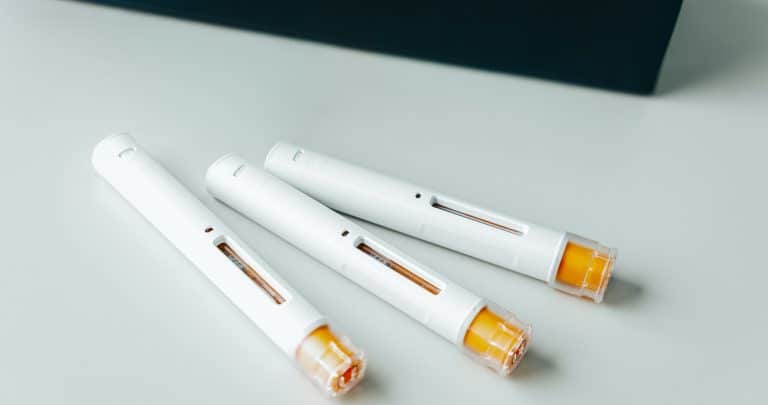
Autoinjector container closure integrity is difficult to test directly. Existing methods typically require disassembly, are destructive and can be difficult to validate. Many manufacturers therefore remove the prefilled syringe (PFS) and test the syringe alone, which is not the same as testing the assembled device. This case study shows how CCI was evaluated on fully assembled autoinjectors, without taking them apart.
In this study the drug product was in an autoinjector containing a 1 mL long glass prefilled syringe. The project aimed to develop a USP <1207> compliant, non-destructive container closure integrity testing method for this configuration during storage at 5 ±3°C. The method can be readily adapted to evaluate CCI at ambient storage conditions.
Testing through an optically transparent window
The autoinjector has an optically transparent window, which allows the syringe headspace to be measured by laser-based headspace analysis without opening the device. The CCI test method has two steps:
- Condition the samples in a pressurized vessel, which drives carbon dioxide tracer gas through any leak in the sealed prefilled syringe.
- Measure headspace carbon dioxide through the window. An increase in headspace carbon dioxide identifies a breach in CCI.
Measurements were made non-destructively with the FMS-Carbon Dioxide Headspace Analyzer. The approach builds on the principles described in our article on method development for a CCI test using headspace gas ingress.
Developing the method
The client prepared 70 controls and test samples across nine sample groups. The positive control matrix included:
- Empty laser-drilled samples with a 5 µm flow-effective size, used as the certified micron positive controls
- Laser-drilled 10 µm and 15 µm defects submerged under 0.8 mL of water, used as type controls
- Gross positive controls made with a 22G × 3/8 inch syringe needle (413 µm), cut to fit inside the autoinjector assembly
- Unmodified controls, test samples and negative controls
“Type defects” are described in USP <1207.1> Section 4.5.2 as package flaws that, because of their irregularity and complexity, cannot be assigned well-characterized sizes. Only the empty 5 µm samples were treated as certified positive controls. Liquid exposure can alter a laser-drilled defect and invalidate its calibration certificate, and empty samples have the largest headspace volume, making them the worst case for detecting a given defect size.
Each sample was measured five consecutive times to establish a baseline. Samples were then conditioned in a Lighthouse 8L CCI Test Vessel in a pressurized carbon dioxide environment, with the whole vessel held in a 5 ±3°C refrigerator, and remeasured immediately after removal.
Results: detection down to 5 µm
The results indicate that the method can robustly identify leak defects with a flow-effective size down to 5 µm in this autoinjector configuration.
- All positive controls showed a significant increase in headspace carbon dioxide and were identified as breached
- All unmodified and negative controls showed no change and were identified as intact
- 4 of the 5 type controls with submerged defects showed a measurable increase in headspace carbon dioxide
A couple of hours after removal into ambient air, measurable carbon dioxide was still present in the leaking samples. The study also acknowledges a limit that applies to any CCIT method: a product can, in some cases, prevent the identification of a particular defect.
What this means for autoinjector programs
With an optically transparent window, you can evaluate the CCI of the fully assembled autoinjector directly, rather than inferring it from the syringe alone. In addition, the method is appropriate for all phases of the product life cycle, from initial inherent CCI through manufacturing and release into stability. Method parameters can be adjusted to the specifics of a configuration, as appropriate to meet quality requirements.
For the closest related device, see our case study on CCI test method validation for prefilled syringes.
Discuss CCI testing for your autoinjector
Download the case study for the full sample matrix, testing conditions and results, or talk to one of our application scientists about developing a CCI test method for your assembled device.


