Case studies
Oxygen Monitoring During Shelf Life: A Stability Investigation
Headspace oxygen monitoring during shelf-life tracks how much oxygen is present in a container over the course of a stability study. For oxygen-sensitive formulations, a rise in headspace oxygen can signal degradation before it becomes visible. This case study follows a root cause investigation into discolored syringe product, where non-destructive headspace oxygen data explained what happened and when.
Laser-based headspace analysis can be used both to check package integrity and to detect reactive headspace gases that can degrade a formulation. Learn more about the application in our overview of oxygen monitoring in pharmaceutical manufacturing.
The complaint and how it was investigated
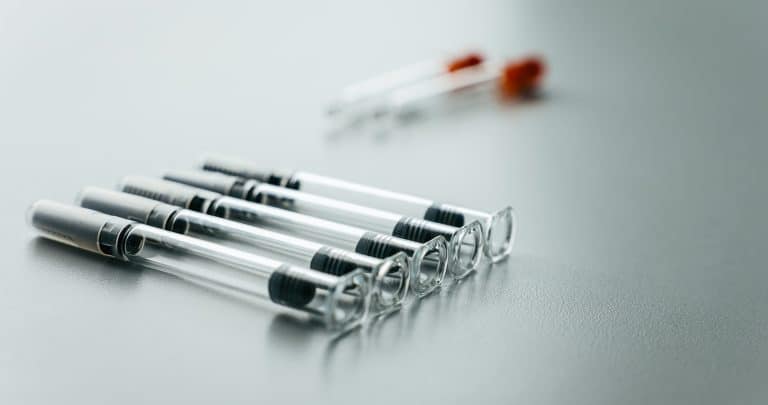
A manufacturer of a syringe product received complaints about discolored product nearing the end of its shelf life. A root cause investigation was started and product syringes were put on stability, with headspace oxygen monitored over time.
Syringes with three fill levels (low, medium and high) were monitored over 12 months. During filling, a nitrogen overlay filled the headspace with nitrogen to protect the formulation from degradation by air, so initial headspace oxygen levels were low. For how a nitrogen purge process can be optimized on the line itself, see our case study on filling line nitrogen purge qualification.
What the oxygen data showed
Headspace oxygen levels began to increase after 6 months. This can be explained by air permeating through the syringe barrier, bringing oxygen into the headspace.
At first, the oxygen that permeated in was consumed by the product. Once the formulation became saturated with oxygen, oxygen consumption could no longer keep up with the permeation rate. From that point, headspace oxygen levels rose.
Why fill level decides how fast it happens
Saturation occurred at the low and medium fill levels, but not at the high fill level. Syringes with less product showed an earlier increase in headspace oxygen.
The explanation is capacity: with less product in the syringe, the formulation saturates with oxygen sooner, headspace oxygen rises earlier and discoloration eventually follows. The same packaging and the same permeation rate can therefore produce different shelf-life outcomes depending on how much product the container holds.
Designing oxygen monitoring into a stability protocol
The investigation provided an opportunity to extend the product’s shelf life, either by optimizing the formulation or by improving the packaging to provide a better barrier against gas permeation.
For QC laboratories working with oxygen-sensitive formulations, non-destructive headspace analysis with the FMS-Oxygen Headspace Analyzer offers an alternative to destructive methods using electrochemical sensors, gas chromatography or invasive sensors. Samples are preserved for other tests, and product disposal and contamination issues are avoided.
Syringe programs often need container closure integrity data as well. See our case study on CCI test method validation for prefilled syringes.
Add oxygen data to your stability program
Download the case study for the complete 12-month results, or talk to one of our application scientists about headspace oxygen monitoring in your stability studies.