Webinars
USP <382>: What Functional Suitability Means for Your Container Closure Integrity Strategy
Since 1 December 2025, functionality testing of elastomeric closures sits in USP <382>, not USP <381>. The blue dye self-sealing test has been retired, and integrity must now be demonstrated with validated methods referenced in USP <1207>. This webinar explains what changed, what it asks of your organization, and how to build a container closure integrity testing strategy that can be used across the product life cycle.
Blue dye immersion is no longer enough
For years, USP <381> combined chemical qualification of elastomeric components with a limited set of functionality tests: penetrability, fragmentation and self-sealing capacity. Self-sealing was assessed by blue dye immersion, with one fixed set of parameters applied to every vial size and product end-use.
USP <381> is now dedicated solely to physicochemical material qualification. Functional performance has moved to USP <382>, which asks a broader question: can your packaging or delivery system reliably contain and deliver the dose over its entire life cycle?
What USP <382> asks of you
USP <382> introduces a functional suitability mindset. It widens the scope of testing and moves responsibility for the validation strategy to the drug product manufacturer. This webinar covers the requirements that matter most for your packaging program:
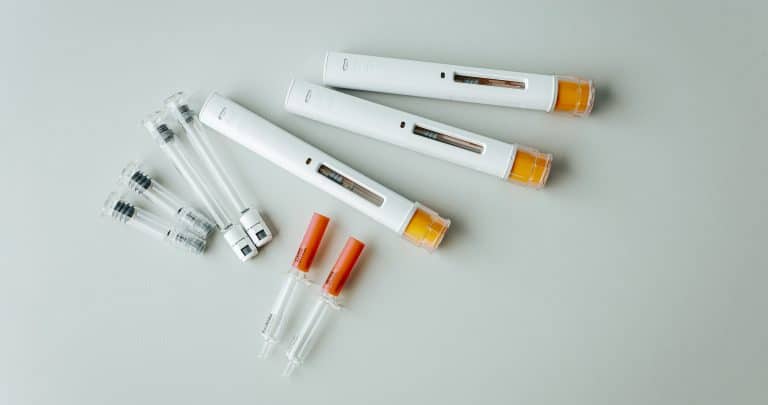
- Scope extended to all elastomeric component systems: vials, pre-filled syringes, cartridges, infusion bottles, tip caps and needle shields
- Evaluation parameters linked to your product’s Instructions for Use and to ISO functional standards for combination products
- System integrity demonstrated against the Maximum Allowable Leakage Limit (MALL), with direct reference to USP <1207>
- Ownership of the end-use validation strategy placed with the drug product manufacturer, rather than relying solely on component suppliers

Deterministic CCIT with laser-based headspace analysis
Probabilistic methods such as dye ingress depend on events that cannot be fully controlled and on an operator’s visual judgement. Deterministic methods replace that judgement with an objective measurement that is reproducible from sample to sample, which is why USP <1207> favors them for container closure integrity testing.
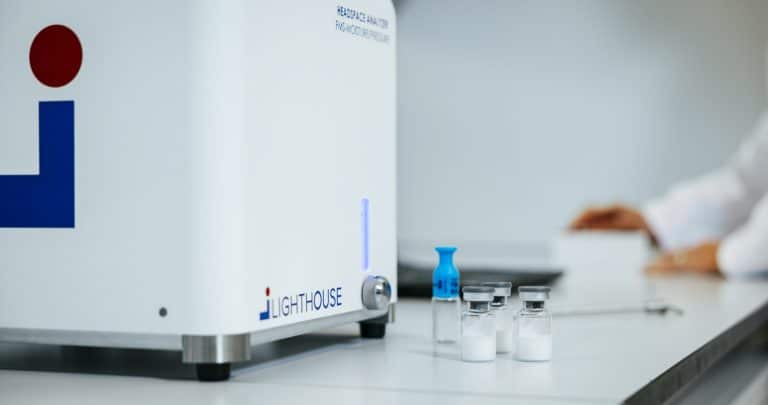
Laser-based headspace gas analysis measures oxygen, carbon dioxide or pressure in the container headspace within seconds. It is non-destructive, so the same container can be measured repeatedly over time. That property is the basis for both studies presented in this webinar.
Integrity across the full product life cycle
Meeting USP <382> and USP <1207> is one part of a wider container qualification program. The webinar shows how compendial chapters such as USP <662> and <671>, informational guidance in USP <1207>, and external standards such as ASTM D4169 for distribution testing fit together, covering manufacturing, assembly, distribution and clinical use.
Full USP <382> test suites are designed for packaging system development and inherent integrity qualification, often on empty containers. Maintaining container closure integrity is a separate obligation that runs through stability programs and shelf life. The tests you apply at each stage will depend on their intent and on the type of sample, empty or filled.
Who should watch
- Quality and QC managers responsible for CCI
- Packaging development and combination product engineers
- Regulatory affairs professionals preparing for USP <382> compliance
- Analytical scientists replacing legacy dye ingress methods
Prepare your packaging strategy for USP <382>
The transition affects every sterile product with an elastomeric closure. Watch the full session to see what the new chapter requires and how deterministic headspace analysis supports a defensible CCI strategy.